Q2 Market Commentary: A Look Back & Ahead
MODERNIST’S ASSET CLASS INVESTING PORTFOLIOS ARE STRATEGICALLY INVESTED WITH A FOCUS ON LONG-TERM PERFORMANCE OBJECTIVES. PORTFOLIO ALLOCATIONS AND INVESTMENTS ARE NOT ADJUSTED IN RESPONSE TO MARKET NEWS OR ECONOMIC EVENTS; HOWEVER, OUR INVESTMENT COMMITTEE EVALUATES AND REPORTS ON MARKET AND ECONOMIC CONDITIONS TO PROVIDE OUR INVESTORS WITH PERSPECTIVE AND TO PUT PORTFOLIO PERFORMANCE IN PROPER CONTEXT.
As evidence-based investors, we use an approach fueled by data with over 50 years of research, rooted in diversification, and tax conscious investment options. Time has proven the value of investing. While these quarterly market reviews are helpful for staying informed, we also love to remind our clients and community: focus on what you can control, remember the big picture, and stick to your plan.
market snapshot
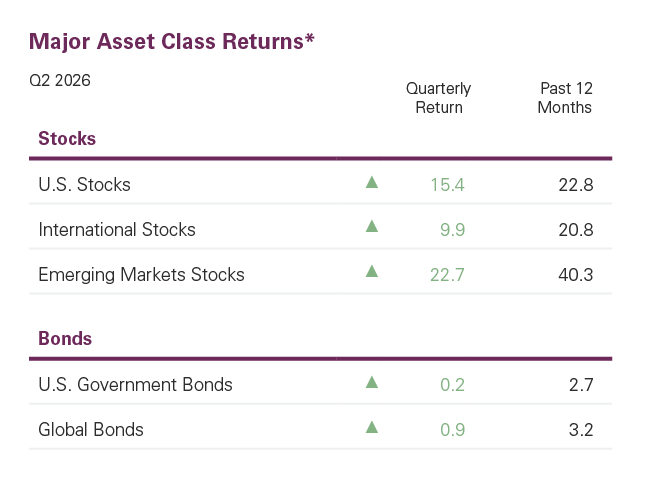
U.S. equities surged, with the S&P 500 up about 15%, its best quarter since 2020, led by semiconductors and AI infrastructure demand. Emerging markets were the top performer, driven by strong gains in South Korean and Taiwanese chipmakers. Developed international markets rose but lagged, held back by their distinct lack of exposure to the semiconductor and AI names powering gains elsewhere.
U.S. and international fixed income once again generated modestly positive returns in Q2, as income was largely offset by declining prices. Markets priced in a more hawkish Federal Reserve under new Chairman Kevin Warsh, pushing yields higher and weighing on bond prices.
Economic Spotlight:
How Often Do IPOs go to the moon?
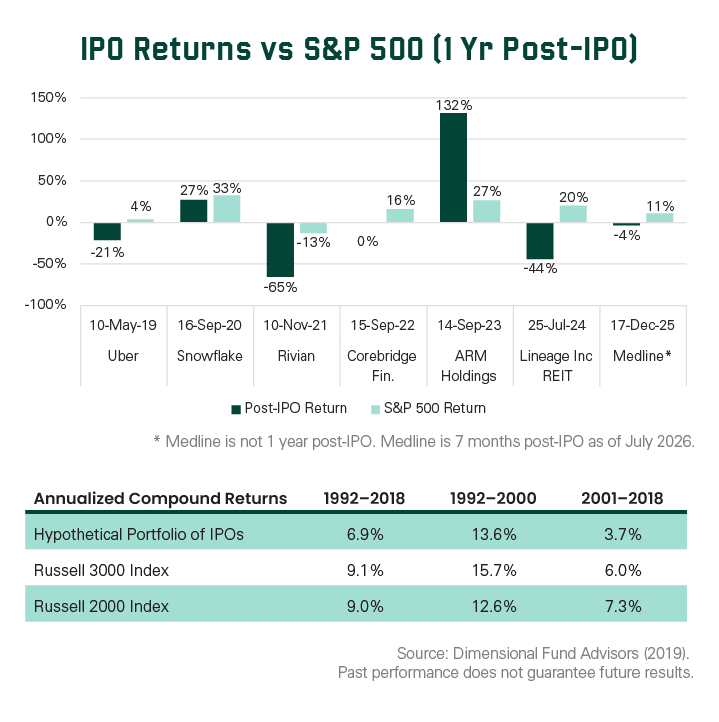
The recent SpaceX IPO has shined a new spotlight on public offerings, leading many investors to evaluate their place in a portfolio. While IPOs can generate significant excitement, investing in a single stock comes with greater volatility and a wider range of potential outcomes than a diversified portfolio and that is no less true for newly public companies.
Historical evidence suggests IPO outcomes vary widely, with relatively few companies outperforming broad market indices over extended periods. Investors are often drawn to the "IPO pop," when shares rise sharply shortly after their public debut, but these initial gains are frequently shortlived and have not been reliable predictors of long-term success.
Two different comparisons help illustrate this. The first is a hand selected sampling of the largest and most high-profile IPOs from 2019 through 2025, comparing their first 12 months of returns post-IPO to those of the S&P 500 and the Russell 2000 indices over the same period. The second analyzes a hypothetical market cap-weighted portfolio consisting of all IPOs issued over the preceding 12-month period, rebalanced monthly to the same indices. (1) In both cases, the evidence provides little support for the notion that IPOs consistently outperform the broader market.
For investors seeking exposure to high- quality, early-stage venture and growth companies, private markets offer a more compelling opportunity set. By investing earlier in a company's lifecycle, investors can gain access to growth opportunities that may occur well before a company reaches the public markets, while also benefiting from diversification across multiple companies rather than relying on the success of a single newly public stock.
FED Regime ChangE turns hawkish as growth cools
Main Takeaway
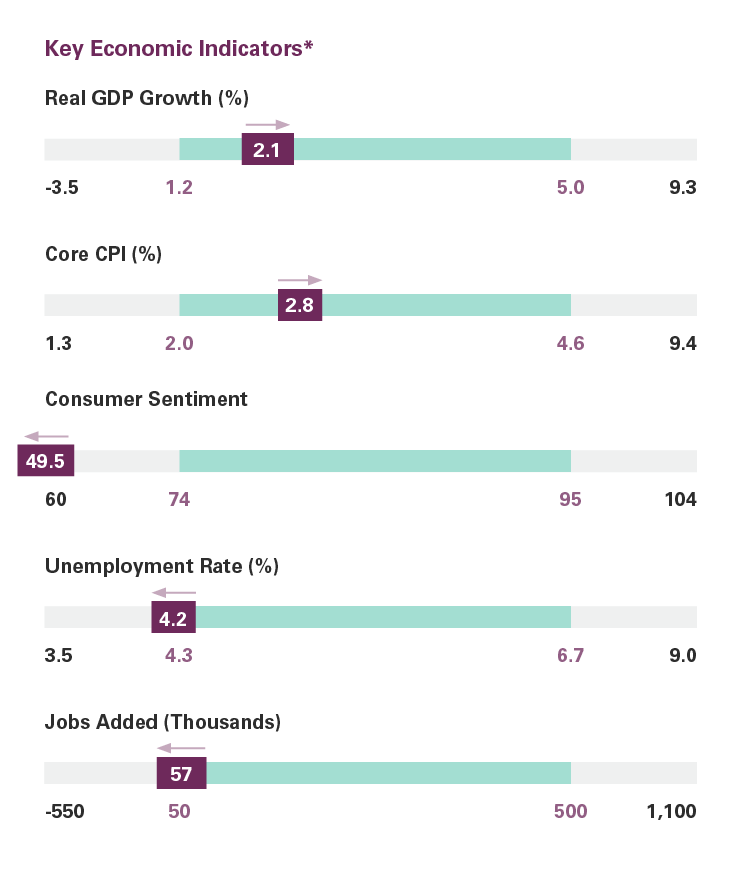
The U.S. economy rebounded from a slow fourth quarter, expanding at a 2.1% annualized rate (1) in Q1. Consumer spending remained resilient despite declining consumer confidence. Meanwhile, tensions in the Middle East continue to pressure energy prices and add to market uncertainty. The labor market remains healthy overall but is showing signs of cooling, with employers adding just 57,000 jobs (2) in June and the labor force participation rate declining for a second consecutive month.
Top Risks
Stubbornly high inflation (4.2% in May (3)) has turned the Fed hawkish under new chair Kevin Warsh, raising the threat of rate hikes rather than cuts. Meanwhile, uncertainty surrounding the conflict in the Middle East could reignite oil shocks that simultaneously fuel inflation and drag on growth. Consumer confidence remains near record lows even as spending holds up while a cooling job market adds further cost pressure heading into Q3.
Sources of Stability
Recent economic data suggest the U.S. economy remains on solid footing heading into the second half of the year. Although having moderated recently, economic growth remains positive while unemployment remains low at 4.2% (2) and consumer spending has stayed resilient despite weak sentiment. If tensions in the Middle East ease, lower energy prices could ease inflationary pressures and give the Fed greater flexibility, improving the outlook for both economic growth and inflation as the year progresses.
KEY ECONOMIC INDICATORS: AREAS TO WATCH
U.S. Economic Growth
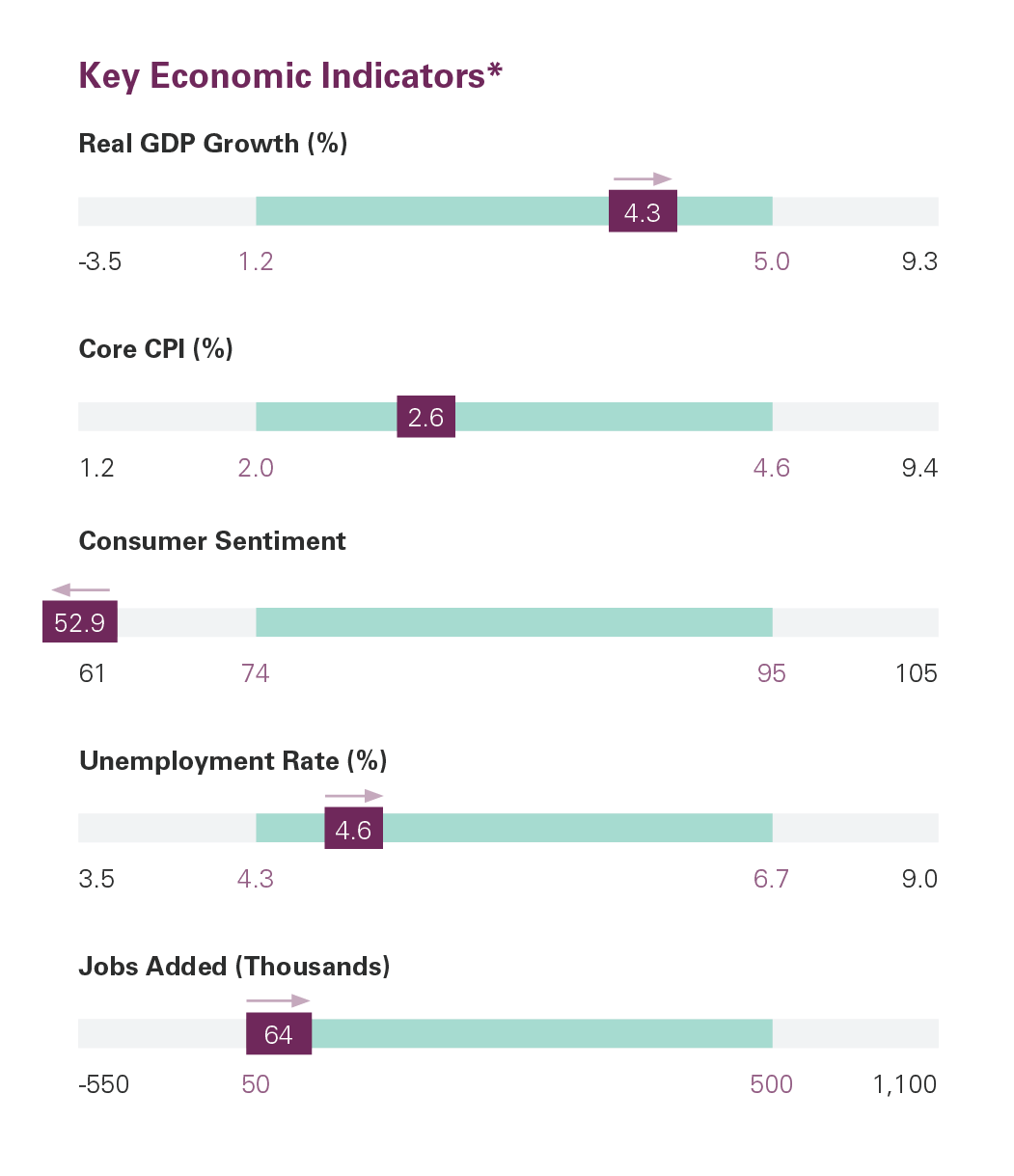
U.S. economic growth accelerated in the first quarter, expanding at a 2.1% annualized rate (1) after a government-shutdown-depressed 0.5% pace in Q4 2025. Excluding inventories, trade, and government spending, real final sales to private domestic purchasers rose 1.7% (1), slightly below the 1.8% pace in Q4. Looking ahead, the Federal Reserve Bank of Atlanta's GDPNow model projects Q2 GDP growth of approximately 1.3% (2), while real final sales to private domestic purchasers are tracking near 2.5%, suggesting underlying private-sector demand is projected to strengthen despite slower headline growth.
Inflation Trajectory
Energy prices continued to keep headline inflation above the Federal Reserve’s 2% target in May, while core inflation remained more subdued. Headline CPI rose 0.5% during the month (2) and 4.2% year-over-year, driven largely by a 3.9% increase in energy prices. Core inflation came in slightly below expectations at 0.2% in May and 2.8% year-over-year. The report was encouraging for the Fed, as inflationary pressures appear concentrated in energy rather than broadening across the economy, limiting concerns about a persistent inflation resurgence.
Monetary Policy
As expected, the Federal Reserve held the federal funds rate at 3.50%–3.75% at both its May and June meetings. Markets watched the June meeting closely as the first under new Chairman Kevin Warsh, who revealed little about his views, notably abstaining from submitting a "dot plot" projection. The dot plot (4) from the other FOMC members signaled a policy shift, with the median now projecting one rate hike. This marks a meaningful change since January, when the consensus called for two rate cuts over the year.
Federal Reserve Regime Change
Sworn in as Federal Reserve Chairman on May 22, 2026, Kevin Warsh quickly signaled that change was coming. At his first FOMC meeting, he announced five task forces focused on Fed communications, the balance sheet and ample reserves framework, economic data sources, productivity and employment, and inflation. Together, these initiatives suggest a broad reassessment of the assumptions, tools, and frameworks that have guided monetary policy for the past two decades. While change is likely to unfold gradually, the task forces point toward a quiet revolution in how policy is formulated and implemented.
Labor Market
The June employment report showed employers added just 57,000 jobs (1), well below expectations of 172,000, while the prior two months were revised down by 74,000. Although the unemployment rate dipped to 4.2%, the decline appears driven by workers leaving the labor force, which shrank by 720,000.
The household survey showed 507,000 fewer people employed in June and one million fewer over the past year. Labor force participation fell to 61.5%, while Conference Board and NY Fed surveys indicate growing worker pessimism about job prospects.
Consumer spending
Consumer spending moderated in Q1, rising at a 0.5% (2) annualized rate, down from 1.9% in Q4 and below the 3.5% pace in Q3. Despite the slowdown, consumer spending appears to be rebounding in Q2 with Bank of America card data (3) showing spending growth accelerating in June, the strongest year-over-year increase in more than four years. Consistent with this, the Atlanta Fed projects consumer spending growth of roughly 1.3%⁴ in Q2. While consumer sentiment has rebounded from recent lows, it remains well below year-ago levels, suggesting households remain cautious despite continued spending.
Global Economy
Economic growth was mixed across Europe in Q1, with U.K. GDP growing at a 2.4% (5) annualized pace while the Euro Area contracted at a 0.8%5 annualized rate. Asia showed strong growth, with China's economy expanding 5.3% (5) annualized while Japan grew at a more modest 1.8% (5) annualized. Looking ahead, the World Bank trimmed its full-year 2026 forecast for global GDP growth from 2.6% to 2.5% (6), citing a sharp rise in energy prices and weaker trade driven by the ongoing conflict in the Middle East as the main contributors to the downgrade.
PRIVATE CREDIT
Private credit continues to face scrutiny over credit quality, particularly in technology. Software loans, which represent roughly 19% (7) of the middle-market loan universe, were marked down an average of 3% (7) in Q1, creating unrealized losses similar to banks' loan-loss reserves. Historically, about half of unrealized losses during the Global Financial Crisis, COVID, and the 2022 rate-hike cycle were ultimately realized. If history repeats, software loan losses would average roughly 50 basis points annually over the next three years—well short of a private credit meltdown.
Thanks to our reliance on long-term evidence-based investing principals, we know that short term data is too noisy to determine our investing choices. Yet, we always like to offer our review of markets because we believe this information should be accessible to all!
Investment Planning Implications
Where do markets go from here?
AI continues to drive majority of returns. U.S. equity returns continue to be driven by the AI trade, with leadership shifting toward semiconductor and memory companies. The PHLX Semiconductor Index gained 88% in Q2 alone. As a result, U.S. large-cap indexes have become increasingly concentrated in a handful of AI-related stocks, raising concerns about elevated valuations and growing market concentration.
Can consumers keep up? Consumer spending continues to outpace income growth, historically a sign of slower economic growth. Today, however, many wealthy households and retirees are funding spending from accumulated wealth, supported by strong equity and housing markets. While a significant market downturn could weigh on consumption, healthy household balance sheets suggest spending may remain more resilient than income trends alone imply.
Uncertain monetary policy. A new Fed chairman looking to put his stamp on the institution, paired with a cooling but stillsimmering conflict in the Middle East, has only deepened an already uncertain monetary policy backdrop. That uncertainty shows up clearly in the Fed funds futures market, which has moved from pricing in no Fed action for 2026 as of April to pricing in one hike by mid-June.
What are the investment planning implications?
Stick with your plan. As highlighted in our Q2 economic commentary, market volatility is common and often sudden. Investors who remained disciplined earned 15.4% in Q2, as measured by the Russell 3000 Index, while those who moved to cash earned just 0.9%, illustrating the cost of reacting to short-term headlines.
Managing inflation risk. Geopolitical tensions in the Middle East have increased the risk of energy price volatility and renewed inflationary pressures. For investors concerned about upside inflation surprises, an allocation to real assets such as commodities or Treasury Inflation-Protected Securities (TIPS) can help preserve purchasing power while providing diversification during inflationary environments.
Know how geopolitical risks impact your portfolio. We do not recommend making portfolio changes based on political events, elections, or escalating geopolitical tensions. While periods of heightened uncertainty often lead to lower asset prices, markets quickly incorporate new information into prices. Ultimately, investment performance depends not on whether the news is good or bad, but on whether it is better or worse than what markets had already anticipated.
For informational and educational purposes only and should be construed as specific investment, accounting, legal or tax advice. Certain information is based on third party data and may become outdated or otherwise superseded without notice. Third party information is deemed to be reliable, but its accuracy and completeness cannot be guaranteed. Indexes are unmanaged baskets of securities that are not available for direct investment by investors. Index performance does not reflect the expenses associated with the management of an actual portfolio. Past performance is not a guarantee of future results. Foreign securities involve additional risks, including foreign currency changes, political risks, foreign taxes, and different methods of accounting and financial reporting. Emerging markets involve additional risks, including, but not limited to, currency fluctuation, political instability, foreign taxes, and different methods of accounting and financial reporting. All investments involve risk, including the loss of principal, and cannot be guaranteed against loss by a bank, custodian, or any other financial institution.